
Few things bring people together, full of pride and community, like the world’s most iconic sporting events. There is no shortage of monumental moments this year, particularly as 11 U.S. cities host the FIFA World Cup.
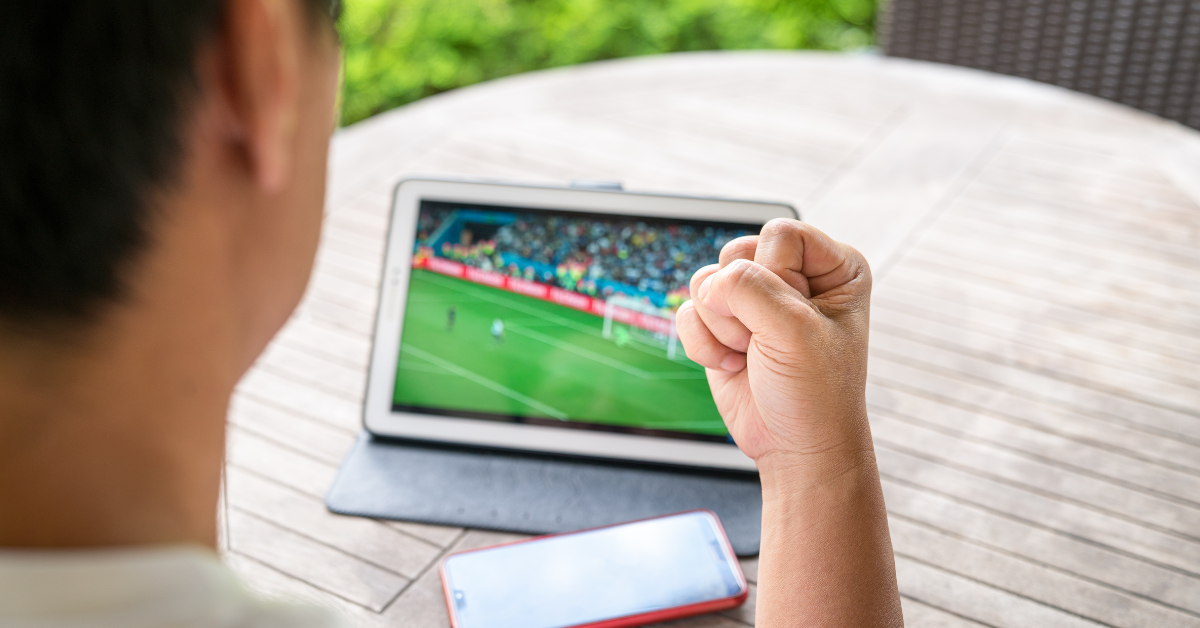
Whether you’re cheering for your favorite teams from home, at a watch party, or in the stadium itself, one thing is clearer than ever: staying connected during the biggest matches has become just as essential as the game itself.
Pregame Fun Fact: Wireless Technology Making History in the World Cup
For the first time, a hidden sensor sits at the center of the official World Cup ball that tracks every kick, spin, and pass. The sensor is designed to capture live data about the ball and transmits the information wirelessly. It’s then combined with camera footage to create a live digital model of the match. This is just the latest example of wireless shaping how we get to experience the biggest moments in the game.
“The Trionda [ball] is proof that hardware, sensors, wireless communication and AI-assisted officiating have become inseparable from the future of sport.”
Game On: 5G Takes the Fan Experience Further
According to a recent report, fans attending the World Cup games are projected to use more than 50 terabytes of data within the stadium of each match. An uptick in data traffic from sporting events aside, we are already demanding more of our wireless networks with our everyday use of smartphones and growing artificial intelligence usage.
To prepare for the World Cup matches over the past year, wireless providers prepared layered macro gear, small cells, and C-band spectrum to strengthen and expand 5G coverage across the 11 U.S. host cities.
As one example, Verizon, as the World Cup partner, deployed upgraded infrastructure in these cities to deliver 3-5x increase in bandwidth traffic using 5G technology. In addition to supporting connectivity at home, 5G Home, or Fixed Wireless Access, is being utilized to enhance pop-up activations, like the FIFA Fan Festival experience, and mobile retailers.
Though it’s not just the World Cup where we’re seeing wireless at the forefront of major sporting events. Earlier this year leading up to Super Bowl LX, AT&T premiered TurboLive in 11 stadiums. The feature is designed to connect users to 5G networks in crowded stadiums.
Teeing off at the U.S. Open, T-Mobile used 5G to power the first-ever USGA mobile rules review. With faster speeds, and without the teams on the ground worrying about delays or dead zones, officials quickly accessed footage to deliver rulings from anywhere on the course.
Post Game: Connectivity Beyond the Stadium
These network upgrades also impact more than how we experience the plays on the field. Whether you’re using a streaming service to watch the match on the go, checking the latest scores, or navigating a stadium crowd, stronger infrastructure and a spectrum pipeline help keep us connected to the action.
This is especially valuable for out-of-town tourists who depend on mobile maps and live transit app updates in a new city. By ensuring a seamless connection, international visitors can focus on the things like discovering America’s hidden gems (really, what’s better than experiencing Buc-ee’s or Taco Bell for the first time?)
Wireless advancements also support emergency response, which becomes even more important as host cities welcome visitors, ensuring access to emergency calling. Dialing 911 and 112 will route callers to emergency services, even those without a SIM card.
Join Us
When smart wireless policy supports our connectivity, we can come together to celebrate every goal, safely and reliably. Join ACTwireless to help make sure that the infrastructure to support these events continues to keep moving and growing.
